Expand your world
The project:
Fewer young people in Iceland hold a university degree than in the countries we measure ourselves against — and that's especially true for young men. At the same time, the need for university-educated specialists has never been greater. Far fewer men than women enroll in university in Iceland, and the gap has been widening for decades. The Ministry of Higher Education, Science and Innovation came to us, and together we built a campaign to lift enrollment.
Project outcomes:
13% rise in male enrollment year on year at the University of Iceland
Record number of applications at Reykjavík University
Our role:
The analysis
Plenty of social and economic factors shape whether someone enrolls in university, but the one that matters most is how they did in school before. Boys, on the whole, get lower grades than girls, so they’re more likely to drop out. It’s clear the project we’re describing here is part of something bigger.
The goal was to get more young people enrolling that spring, with a particular focus on young men. To do that, we had to understand what stops men from taking the step — beyond grades.
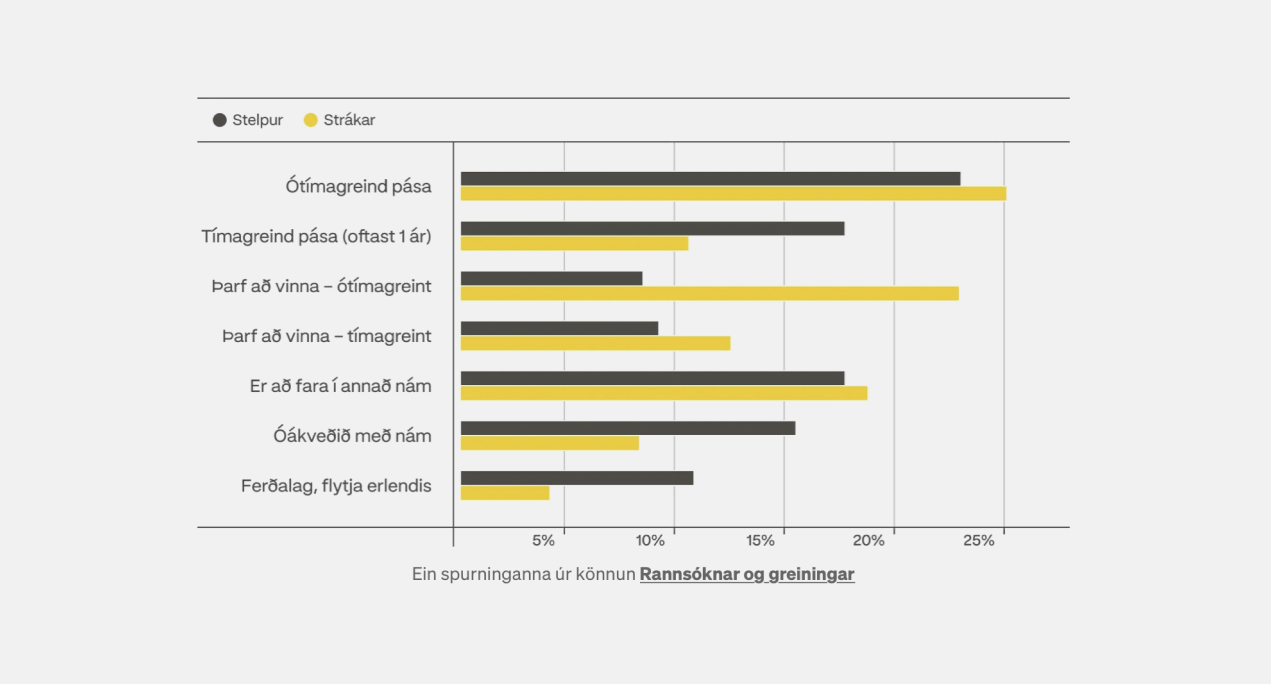
We talked to specialists in the field, looked at recent data, and met with representatives from every university, the Confederation of Icelandic Employers, and the Federation of Icelandic Industries to hear their read on it. With Rannsóknir og greining, we surveyed graduating students at 11 upper-secondary schools around the country about how they saw university. The main thing that came back: young women are more set on university than young men, who let money and lost income hold them back.
The team
Eydís
Copywriter
Steinunn
Consultant

Viktor
Art director

"University studies define me and my whole life. If I choose one path, I can't choose another."
The strategy
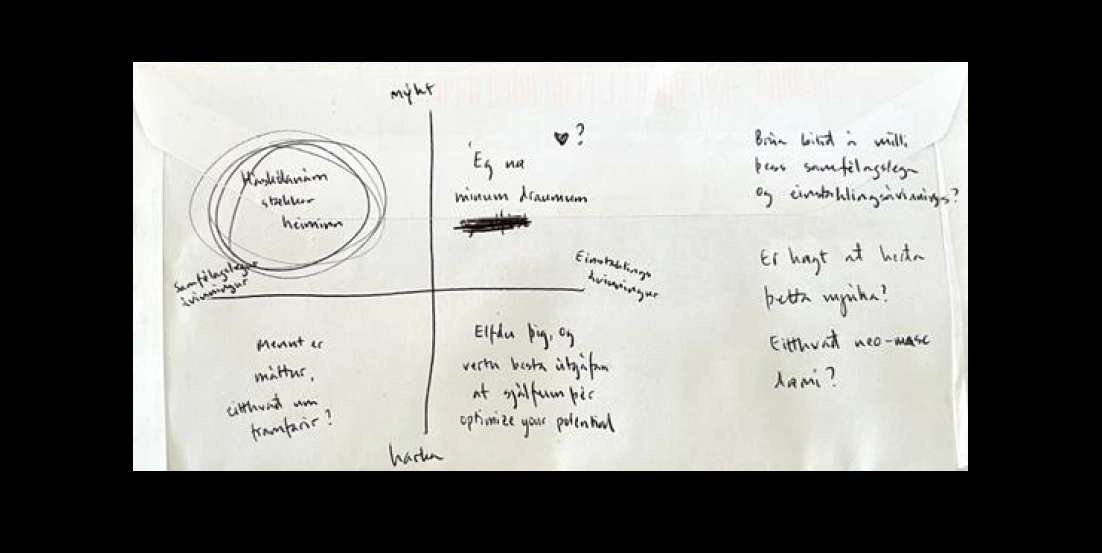
To understand what sits behind that attitude, we spoke directly with young men — some planning a break after finishing school, some who’d dropped out of university, some who’d never enrolled. Their answers held a lot of different stories, but one kept surfacing: the attitude in the quote here. We knew we wouldn’t be the first to tell these guys to go to university, so we approached the whole thing peer to peer.
So we found people the target group could see themselves in — people who could just as easily be them — to tell their own story of university. Stories about starting a family mid-degree, working alongside their studies, switching paths more than once, having no idea what they wanted, finding a real passion in the work, and more. Which program they were actually in barely came up; university is just one side of their lives among many. The point was to reach the ones who don’t know what they want to be when they grow up, and tell them they don’t need to know.
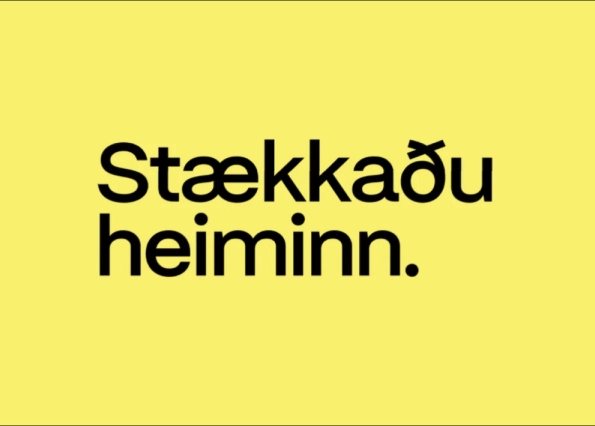
Tell them the world expands at university.
The execution
The videos are built around the emotional needs that surfaced in those early interviews with young men: anticipation, a need for space, connection, self-confidence, and a sense of purpose. The people in the videos talked about their lives and what university had done for them — how it met those needs.
The people who reach this group tend to speak in a kind of “empowering” voice, and we shaped our messages with that in mind. The ads and the copy were simple and direct. Yellow grabs attention, and the accented Icelandic letters in the headlines throw you off just enough to make you look. The content ran on the platforms the group actually uses.
Cookie consent required
To watch this video, you need to accept cookies for this service.
The effect
This was a short-term piece of a bigger effort with one clear aim: lift male enrollment that spring. The University of Iceland’s figures came out recently: male enrollment was up 13% year on year. We’re proud to have been part of it, and grateful to everyone who worked on it with us.